Entrepreneurs, Exits and the Next Chapter: three key takeaways
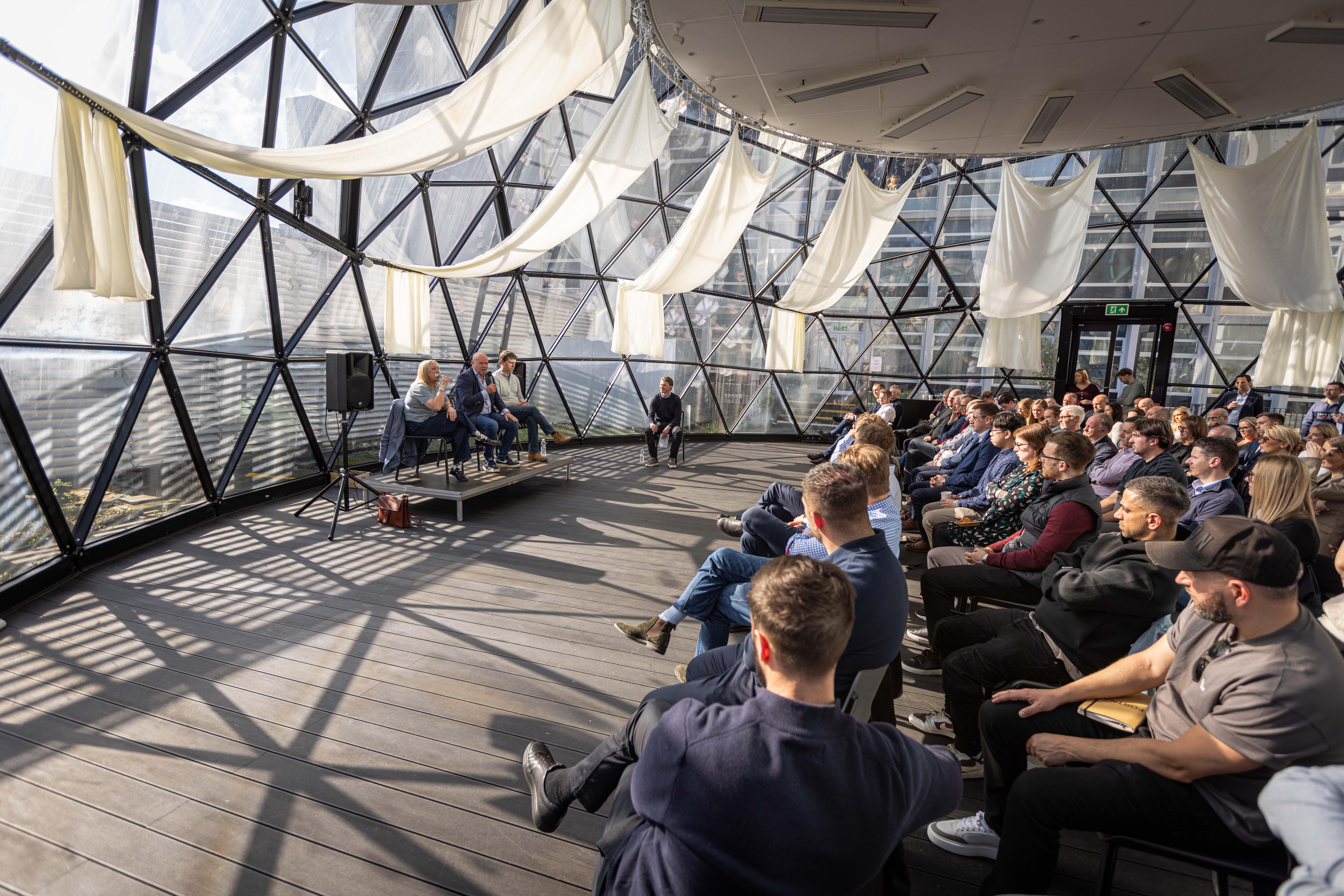
On a bright, sunny morning in April, we hosted the second event in our Entrepreneurs, Exits and the Next Chapter series at The Dome in Manchester – bringing together a mix of business owners, founders, senior leaders and professional advisers to explore what really happens after a business exit.
The aim of the series is to create a space for open, honest conversations around one of the most significant – and often underestimated – moments in an entrepreneur’s journey. Not just the transaction itself, but everything that surrounds it: the preparation, the process, and the reality of life beyond exit.
We were joined by an excellent panel of speakers: Tracey Peers, exited co-founder of Texere Publishing; Jo Sellick, founder of Sellick Partnership; and Tom Canning, President at Worldpanel and experienced non-executive director.a
Alongside the panel, we also heard an economic update from Henry Wilson, Partner at LGT Wealth Management, who shared his perspective on the current market environment and what it means for investors.
Together, the discussion provided a well-rounded view of both the personal and financial sides of life beyond exit, with a level of honesty that really stood out.
Here are our three key takeaways.
- An exit isn’t the end – it’s a transition
One of the strongest themes (and one we see time and again with our clients) was that entrepreneurs follow a very different path to most.
For many people, financial planning is built around a clear destination: retirement. For business owners, that destination is far less defined. An exit often creates freedom, but not finality.
What came through clearly from the panel is that many founders don’t simply stop. Some step into non-executive roles, others explore new ventures, and many take time to reflect before deciding what comes next.
Tom said he considers himself a “failed retiree” – returning quickly to new roles after initially stepping away.
There is also a more personal dimension that is often underestimated. Selling a business can feel like letting go of something you’ve built over years, or likely even decades. It’s an emotional event, as much as a financial one.
That’s why we believe financial planning at this stage needs to go beyond the numbers. It’s about helping our clients think through what comes next, and supporting them as that next chapter begins.
- The exit process is intense – and often underestimated
Another clear takeaway, which built on conversations from our previous event, is just how demanding the exit journey can be.
From the outside, an exit can appear as a single moment: the deal completing. In reality, it is a prolonged period of pressure, focus and, at times, uncertainty.
Our speakers were open about the emotional strain of earn-outs, the challenge of stepping back after years of control, and the intensity of negotiations where so much is at stake.
As Tracey reflected, even after agreeing a deal, “the sale isn’t complete until the ink is on the line” and maintaining performance through that period can be incredibly demanding.
There is also a noticeable comedown afterwards. After such an intense and life-changing experience, many find themselves asking what comes next and not always having an immediate answer.
Jo agreed that the uncertainty during and after the deal can be difficult to navigate, and is something many founders underestimate going into the process.
What this reinforces is the importance of preparation. Not just financially, but mentally and emotionally too. Having the right people around you, including advisers who understand both the technical and human side of an exit, can make a meaningful difference.
- In a more complex world, advice and long-term thinking matter more than ever
Alongside the panel, we heard from Henry Wilson, who highlighted just how complex the current environment has become.
From geopolitical tensions to inflation and energy pressures, there are a number of moving parts shaping markets today. The potential for a more challenging landscape, where growth is slower and inflation remains elevated, is something we are watching closely. Against that backdrop, two ideas stood out.
The first is that navigating this environment alone is becoming increasingly difficult. The value of clear, trusted advice continues to grow as the world becomes more complex. This was echoed by Tracey, who spoke about the importance of relying on trusted recommendations when choosing advisers, particularly in areas outside your own expertise.
This reinforced something we see every day: the right network around you matters. Whether it’s tax advisers, lawyers, or wealth managers, having access to people you trust, and who work well together, can make a significant difference before, during and after an exit.
The second is that successful investing is rarely about short-term decisions. It is about taking a long-term view, staying invested through different cycles, and having a clear, structured plan in place. As was highlighted on the day, the longer you can plan and invest for, the greater your chances of achieving meaningful outcomes.
For business owners, particularly following an exit, this represents an important shift. Managing and preserving wealth over the long term requires a different mindset, and the right support around you.
Final thoughts
What stood out most to us was the honesty of the conversation. There is no single “right” way to exit, and no universal experience. But by creating space for these conversations, and sharing real experiences, we can help others better prepare for what lies ahead.
An exit is a milestone, not the finish line. The process itself is demanding and often underestimated. And in an increasingly complex world, long-term thinking and trusted advice have never been more important.
At Five Wealth, we’re there to support our clients through every stage of that journey – before, during and long after an exit.